Smart vending technology · Atlanta
AI smart coolers explained: how grab-and-go vending works
A clear look at the customer experience, connected inventory, merchandising flexibility, and property types that make AI smart coolers a useful modern amenity.
Petite Café · August 22, 2026 · 6 min read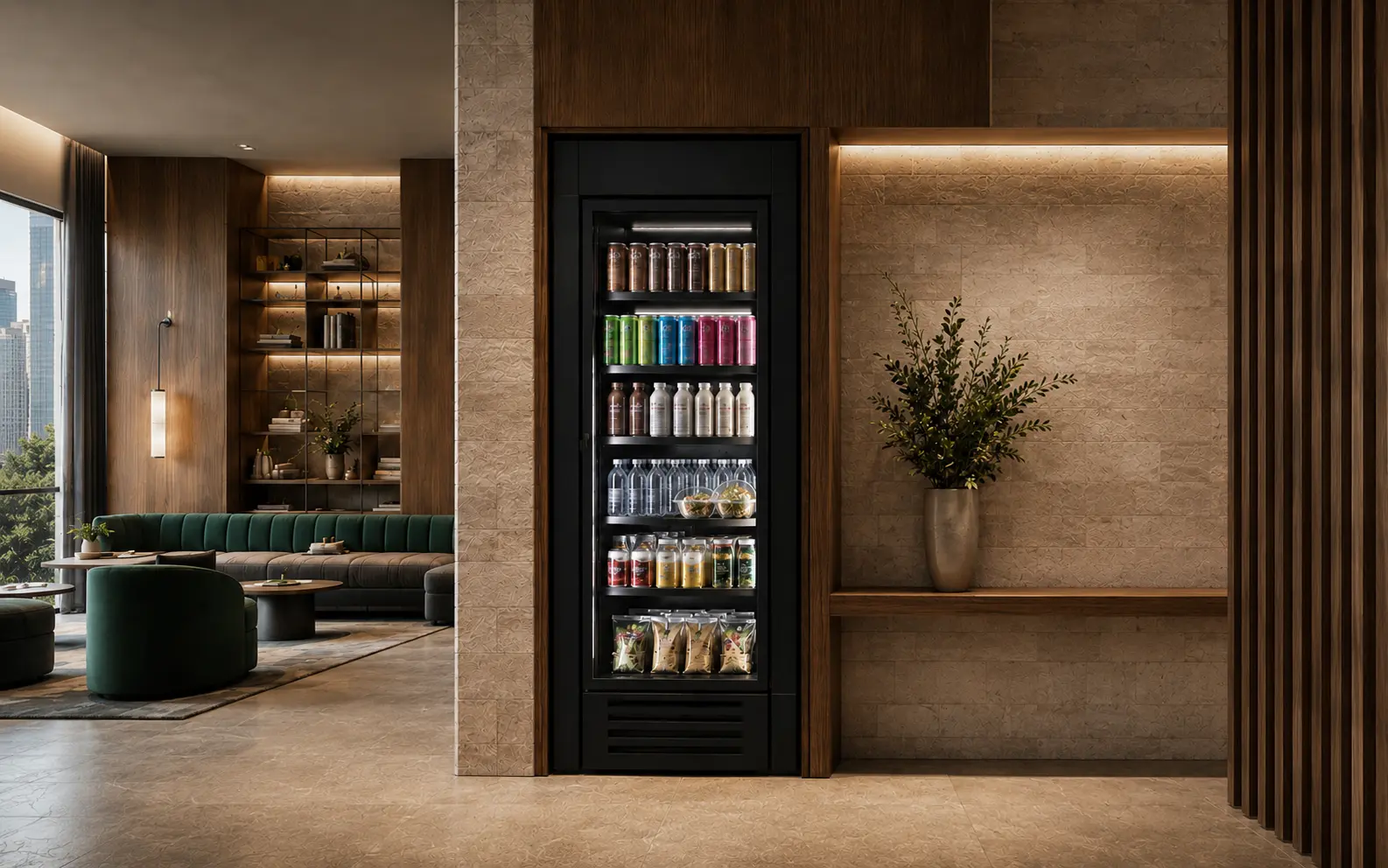
A smart cooler is secure, connected retail
An AI smart cooler combines refrigerated merchandising with cashless access and connected transaction technology. It offers the visual familiarity of opening a retail cooler while keeping merchandise secured until a customer begins a purchase.
The exact recognition and checkout flow depends on the equipment platform, but the customer experience is designed to be simple: authenticate a payment method, open the cooler, select products, close the door, and complete the transaction. This creates more merchandising flexibility than many traditional coil machines while preserving controlled access.
What the customer experience looks like
A customer starts at the payment interface using a supported card or contactless method. After authorization, the door unlocks. The customer chooses the items they want, returns anything they change their mind about, and closes the door. The system then determines the final basket and processes the purchase according to the platform's checkout flow.
Clear instructions, reliable connectivity, visible pricing, and an organized planogram all matter. Good technology should fade into the background so the experience feels intuitive, quick, and appropriate for an apartment lounge, office, hotel, gym, or employee break area.
- Begin with cashless payment authorization
- Open the secured cooler
- Select one or several products
- Close the door to complete the purchase
Why the format expands product choice
Traditional vending spirals and lanes require products to fit specific dimensions and dispense reliably. A cooler format can create more flexibility for bottles, cans, packaged snacks, protein items, and selected fresh foods because products are merchandised on shelves rather than dropped through a delivery mechanism.
That flexibility still needs discipline. Every location should have a clear planogram, appropriate shelf capacity, visible pricing, safe product handling, and an assortment sized to realistic demand. More room for products is valuable only when the users and service schedule can support the inventory.
Connected data supports better restocking
Connected transaction and inventory signals help an operator understand what sold, when demand occurs, and which products need attention. That information can improve route planning, restocking quantities, product allocation, and assortment decisions over time.
Technology does not replace local operations. Reliable service still depends on physical counts, organized pre-kitting, product rotation, equipment cleaning, issue response, and someone accountable for keeping the amenity ready. Petite Café combines the connected equipment with hands-on local management.
- Identify fast- and slow-moving products
- Adjust facings and par levels
- Plan service before avoidable stockouts
- Refine the assortment around actual purchases
Where AI smart coolers fit best
Smart coolers work well where a property wants more refrigerated variety than a compact snack machine can provide, but does not need the footprint of a full open micro market. They can also be useful when secure access is important or when the location needs a polished, self-contained amenity.
Strong candidates include centralized apartment amenity rooms, condominium lounges, employee breakrooms, office common areas, hotels, gyms, and other qualified high-traffic spaces. The final decision should still account for population, visibility, operating hours, nearby food access, power, connectivity, security, and expected product demand.
How Petite Café plans the right setup
Petite Café begins with the property rather than a predetermined machine. We review the audience, traffic pattern, available footprint, access, competitive food options, connectivity, desired assortment, and service requirements. Then we recommend a right-sized smart vending, cooler, micro market, or hybrid setup.
After launch, we manage stocking, product rotation, payment technology, customer support, maintenance coordination, and assortment optimization. The goal is a modern convenience that feels deliberately placed and continues to earn its role in the property.